
How to Search the Denver Court Docket
Got a Denver case number? Denver County Court's Public Portal Quick Search is the natural first stop. It also takes an Arrest Booking number. That figure is marked AB on many Unified Summons and Complaint forms. A valid number opens the Register of Actions. It also shows the schedule, parties, charges, sentence, fines, payments, bond, and officer. Filed papers themselves stay off the public screen. The portal shows entries but no document images.
No number yet? Denver still helps, narrowly. A noncivil future-date search demands a last name, first name, and date of birth. A civil future-date search takes a person's name or a business name. Both tools surface only upcoming settings, not a full docket history under a name.
- Read the court and number on the Denver notice or citation.
- Use Quick Search for a County Court case or AB number.
- Use the future-date form only when looking for an active setting.
- Open the case schedule and note the newest hearing information.
- Ask the correct Denver clerk for the actual paper named in an entry.
One Denver Municipal Docket System
Denver County is the consolidated City and County of Denver. One government covers the same ground. The 2020 Census counted 715,522 residents. No other incorporated cities sit inside the county lines. So no separate municipal docket pages exist, and Denver County Court serves the whole city as its single municipal court.
That structure carries real legal weight. Denver County Court is a court of record. It is funded and administered apart from Colorado's state courts. Its jurisdiction spans municipal criminal and ordinance matters, state misdemeanors, traffic, juvenile municipal matters, civil disputes through $25,000, small claims, protection orders, and warrant review. Felony advisements, bond settings, and preliminary hearings also start here. Qualifying felonies then move on to Denver District Court.
Denver search rule: one city does not mean one court. County Court handles local matters, while Denver District, Probate, and Juvenile courts keep separate state dockets.
The Denver Municipal Court
Denver County Court wears two hats: municipal court and county-level court. Presiding Judge Kerri Lombardi holds the public administrative role listed on the court's site. Criminal and municipal work centers on the Lindsey-Flanigan Courthouse. Traffic and civil work centers on the City and County Building.
That split runs through the docket itself. Criminal and municipal service belongs to the clerk in Room 160 at Lindsey-Flanigan. Traffic and civil service belongs to Room 135 at the City and County Building. Copies and hearing questions follow the same division. So know which side of the house your case sits on. A case number beats a party name here. It pinpoints the local file and unlocks the free ROA. The official Denver County Court history traces the current institution to 1965.
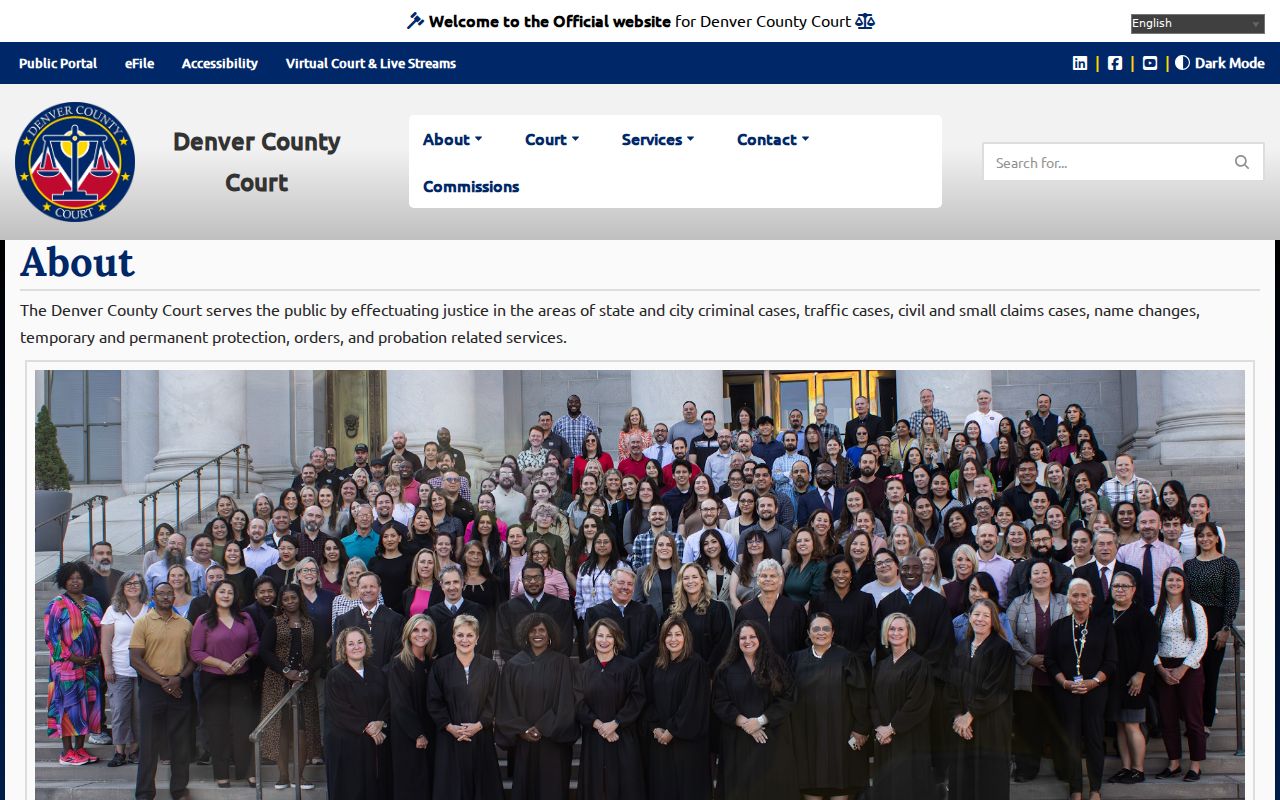
That independent history explains a practical quirk. Denver runs its own public portal rather than relying solely on the Colorado Judicial Branch system.
Two Buildings Split Denver Dockets
Lindsey-Flanigan Courthouse, 520 West Colfax Avenue, anchors Denver's criminal and municipal docket. The clerk sits in Room 160. The counter serves the public from 7:30 a.m. to 4:00 p.m. Call 720-337-0410 for the counter, or email criminal records requests to 160records@denvercountycourt.org. Denver Juvenile Court shares the building.
Civil and traffic matters sit across town at the City and County Building, 1437 Bannock Street. The clerk there is in Room 135. Hours there run 8:00 a.m. to 4:00 p.m., and the phone is 720-865-7840. The state Denver District Court civil, domestic-relations, and records counter occupies Room 256 in the same building. Standing in the right building does not always mean standing at the right office. So confirm the room before you go.
| Denver location | Main local work | Clerk route |
|---|---|---|
| Lindsey-Flanigan | Criminal and municipal docket | Room 160 |
| City and County Building | Traffic and civil docket | Room 135 |
| City and County Building | District civil, domestic, and records | Room 256 |
Denver Court Dates and Settings
A known Denver County Court case carries a Case Schedule. The daily Denver Docket Search works differently. It builds a list for one courtroom and one date. Its table can show the case number, AB or ticket number, party, status, language, case type, scheduled hearing, time, disposition, domestic-violence flag, counsel, and date of birth.
Trust the newest setting. A continuance moves the live hearing without erasing the older docket entry. The appearance label matters too: IN PERSON and TELEPHONE demand different preparation. If the room or mode looks unclear, ask the clerk, who speaks with authority.
| Date | The current scheduled day, checked against later Denver resets. |
|---|---|
| Time | The listed start time for the individual event or docket call. |
| Courtroom | The room shown now, subject to reassignment near court. |
| Judge | The judicial officer tied to the current calendar when displayed. |
| Setting Type | Advisement, pretrial, status, motion hearing, trial, sentencing, review, or another event. |
Denver Docket Rooms May Change
Rooms 135 and 160 are clerk offices, not fixed courtrooms. Denver County Court warns that a schedule listing either one may be reassigned within 48 hours. So a saved docket entry can be accurate as history yet stale as a place to appear.
Recheck the case schedule right before court. Keep the date, time, hearing type, current room, and appearance method. For a Lindsey-Flanigan matter, call the criminal and municipal clerk; for the City and County Building, the traffic and civil clerk. Virtual observation works only when a judicial officer activates the stream. And Colorado law forbids unauthorized recording or reproduction. A blank livestream link cancels nothing and does not lift the duty to appear.
Denver Traffic Tickets
Denver County Court hears traffic cases under Colorado statutes and Denver ordinances. Most go to the Traffic Division at the City and County Building. DUI cases are different. They go to the Criminal Division at Lindsey-Flanigan. With a known case number, you can open the ROA and the schedule. A name and date of birth works too. That search can locate an active future court date.
A Denver citation may print a reduced-points and fine offer. Accept it in the Public Portal. An online guilty plea and payment must happen before the court appearance. Pleading not guilty means a visit to Room 135 on a workday before the printed time to set a final hearing. No printed offer? That citation also requires a Room 135 appearance. Paying counts as a plea and disposition step, not just an information fee.
If online payment fails, call the Denver clerk. A payment-plan deadline still stands on its own. Default can add costs, lead to collection or wage garnishment, and require warrant or bond action before payment proceeds. The Denver County traffic court records page separates the court file from the DMV record.
Denver Photo and Parking Records
A photo notice is not yet a courtroom case. Denver's official process allows payment, a Not Pictured Driver submission, a not-guilty response, or no action at all. Doing nothing has consequences. The matter can pass through penalty assessment, service, court filing, a final hearing, a default judgment, and collection. Each stage can create a different Denver record.
Parking follows its own route. A citation must be paid or disputed within 20 calendar days, and timely disputes are set in Room 140 on weekdays. After day 20, the math changes. From day 21 through 120, the normal final-hearing path is closed and a general motion is needed. Past 120 days, a default judgment exists. A motion to set aside must then state good reason for the delay. An adverse finding or missed hearing adds $26 in court costs. If unpaid, the vehicle can go on a boot list.
Keep these files straight. A photo notice, a parking file, a County Court case, and a Colorado DMV driver record are all distinct, and the Denver Traffic and Civil clerk handles only its general case services.
Where Denver Cases End Up
Case type decides where a Denver docket lives. Ordinance violations, state misdemeanors, traffic matters, and small claims stay with Denver County Court. Civil disputes within County Court's limit do too. A felony may begin there for advisement, bond, and a preliminary event. The merits docket belongs to Denver District Court. Major civil and domestic cases begin in state court too.
Docket flow: Denver County Court › Denver District Court › Colorado Court of Appeals
An appeal does not erase the Denver trial ROA. Under Colorado Rule of Criminal Procedure 37, Denver County Court directs covered appeals of state criminal, municipal, traffic, and parking cases to Denver District Court. Timing matters here. The Notice of Appeal and transcript designation generally must be filed with both courts within 35 days after sentencing or denial of a post-trial motion. The Denver County court docket overview explains the county and state systems in more depth.
Denver Felony Docket Handoffs
A Denver felony can show up in two systems. It is still one prosecution. Denver County Court handles the early advisement, the bond setting, and the preliminary hearing. Once the charge is filed or bound over, the merits docket moves. Denver District Court owns it from there. The County Court entries stay part of the early public case history.
Start with the case type and the latest court paper. Check the Denver County Court portal for the local stage. Use the Colorado Judicial docket search for a District setting. A state CR number belongs on the state side. Denver GV, GS, and D numbers stay local. If the handoff is unclear, call the clerk who issued the latest notice before assuming the case is missing or sealed.
A charge is an allegation. A bond entry is not a disposition. The result appears in the disposition and sentence portions of the Denver court record.
Public Access to Denver Court Records
Denver access starts with the ROA or the scheduled docket, not unrestricted downloads. To see filed images, request them from the clerk who owns the file. Criminal and municipal copies go to Room 160 or 160records@denvercountycourt.org. Traffic and civil copies go to Room 135 or civil@denvercountycourt.org. Formal Denver County Court data requests may be emailed to coradatarequests@denvercountycourt.org, delivered in person, or mailed to 1437 Bannock Street, Attn: Record Request, Denver, CO 80202.
Phone and social-media requests are not formal. Put the specifications in the body of the email. Paper copies cost $0.25 per page. Certification adds $20 per document. Ordinary electronic copies are often free. Broad requests can carry research and redaction fees.
Denver access rules:
CJD 05-01 controls Judicial Department court-record access and exclusions.
Colorado Open Records Act applies to public records, while judicial case files also follow court directives.
Colorado Criminal Justice Records Act governs criminal justice records and records of official action.
Denver Docket Filing Baseline
How big is a year at Denver County Court? The Denver Auditor's court-operations report put 2017 filings at 125,523. Traffic dominated the docket, with 85,489 matters. Misdemeanor-criminal filings came next at 21,274. General Session filings totaled 18,760. The same report logged roughly 117,000 dispositions for the year. Keep the date in mind, though. These figures describe 2017, and they do not reflect Denver's caseload today.
Volume explains why Denver splits its counters and packs detail into every calendar line. Each daily docket entry may carry language, status, hearing type, counsel, and other routing fields. Past totals describe history only; they do not promise what future filings will look like.
Denver Portal and Self-Help Access
The Denver County Court Public Portal covers the everyday chores of local case work. You can pull ROA records by number and check future dates. The portal also lets you view courtroom dockets, pay eligible fines, and post bonds. A published roadmap promised more for summer 2026. That includes self-represented e-filing of new civil cases. Filings in existing criminal, municipal, and traffic matters were promised as well. Treat a roadmap as a plan, not a promise. Even where public e-filing goes live, pleading images stay closed to the public.
Self-help centers around the city handle forms, procedure, and plain-English terms. The official Denver self-help directory lists the District domestic-relations, Probate, County Civil, and Juvenile locations.
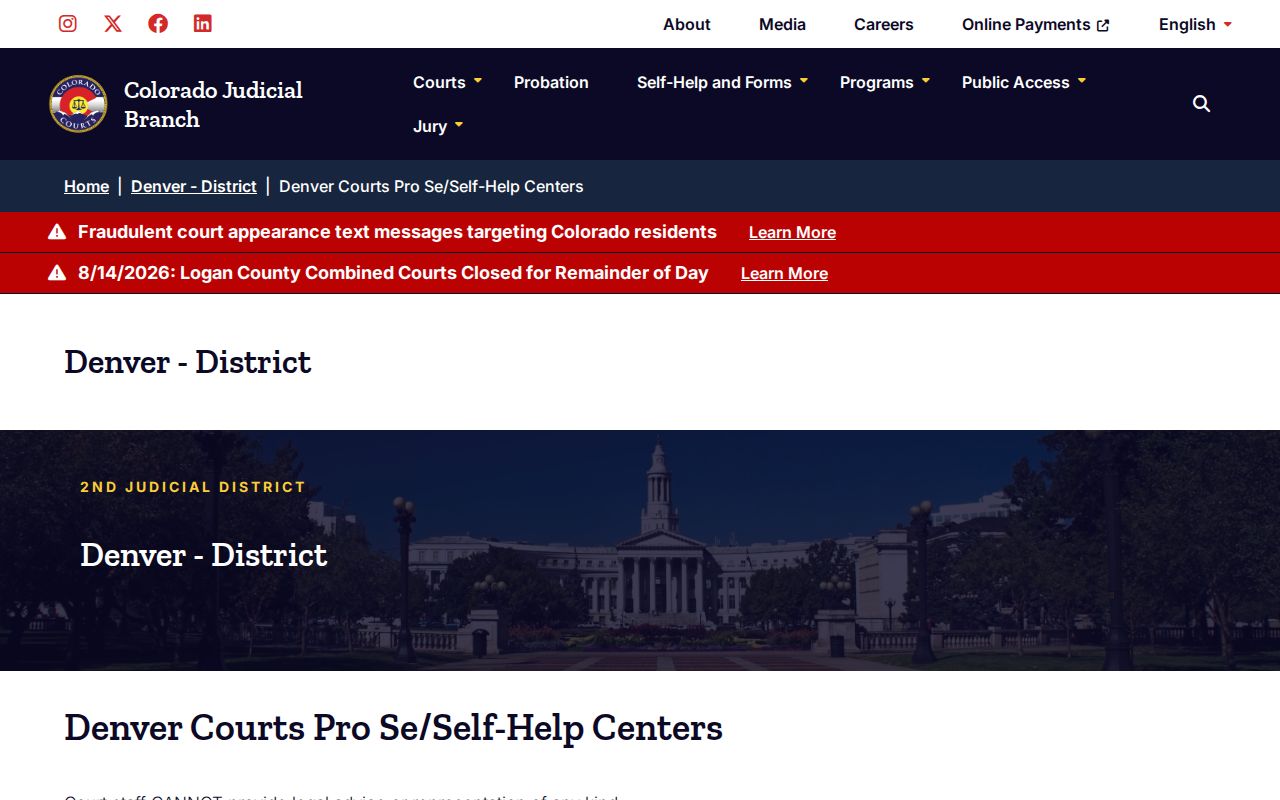
Self-help staff can walk you through forms and filing steps. For the official Denver docket or certified copies, though, go to the clerk who holds the case.